Kunming: Flying Tigers, Hump pilots, & the AACS—oh my!
- Aug 29, 2025
- 4 min read
Updated: Sep 26, 2025
Earlier this year I decided to follow in my grandfather's footsteps all the way to China, where he served in the Army Airways Communications Services (AACS) from May 1944 to months after the end of the war in 1945.
To kick off my trip, I first landed in the city of Kunming—the largest city in the Yunnan Province (southwestern China) with a little more than eight million people currently.
It's also a place filled with history—the former home of the Flying Tigers, the end of the Hump run terminus from India, and my grandpa's first arrival point after flying over those Himalayas.
I was eager to uncover what this city had to offer regarding its notable past and also visit some of the places my grandfather saw.

Kunming city
Known as the "City of Eternal Spring," Kunming boasts stunning mountainous landscapes and pleasant weather.


However, its significance stretches far beyond its natural beauty.
This city played a vital role as a base for the Flying Tigers, a unit of American volunteer pilots who aided Chinese forces against Japan unofficially before the Japanese attacked at Pearl Harbor.


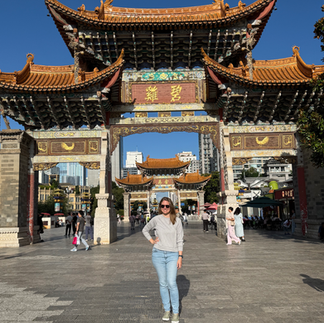


It was also the main terminus of The Hump run, where the Air Transport Command (ATC) shuttled supplies and men from India into China over the treacherous Himalayan Mountains.


Although the old runway doesn't exist anymore, I still couldn't help but imagine the relief all those pilots must have felt upon seeing the landing site just after the large, freshwater lake.
And as I walked through the Old Town of Kunming and pictured it filled with American GIs, the history seemed to come alive.

I could imagine all the people and vendors selling various types of street food and products, just as they do today.




Not far from the Old Street is a beautiful monument celebrating the defeat of the Japanese, which just so happened to be exactly 80 years to the date of my visit!

Kunming Municipal Museum
The Kunming Municipal Museum surprised me with a rich collection of artifacts and exhibits showcasing the region's unique history; I spent hours browsing the Flying Tigers and Hump pilots permanent exhibition.
Because of the 80-year anniversary of the Japanese surrender, special signs could be found throughout the city.


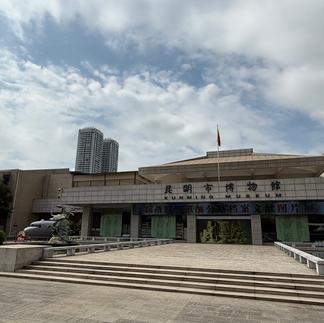


To my surprise, I had many of the objects on display, thanks to a grandpa who saved everything!

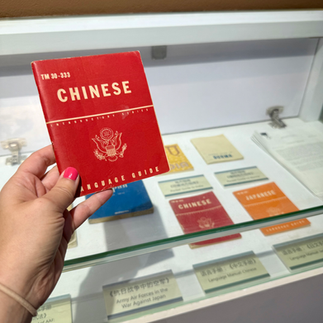


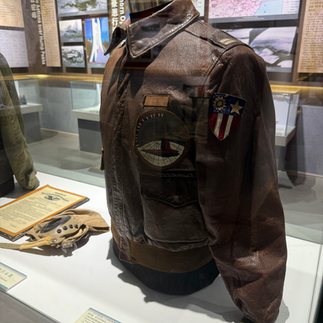
Within the displays, there are tons of objects, such as a flight jacket worn by a Hump pilot!


It was also a surprise to come across a theodolite, which my grandpa used to calibrate the direction finder technology that helped pilots navigate.

The temporary exhibit was also eye-opening, as they have one of the only remaining full suits from the Flying Tigers.
And check out that parachute!

It was also great to see that they had information available in both English and Chinese.

The Flying Tigers Memorial Hall
My next visit was to the Flying Tigers Memorial Hall, designed to honor the brave pilots of the American Volunteer Group (AVG).





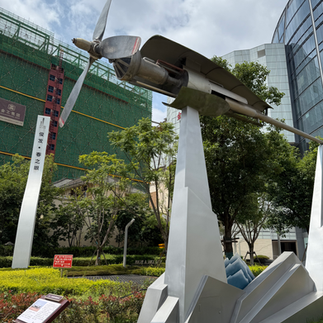
The building itself was built in the 1930s and was the old offices of a Chinese aviation company.
The memorial opened in 2012, and although it's a smaller version of the exhibit at the municipal museum, it is still worth a visit!
Here I took a picture with 102-year-old Hump pilot Bob Moore and sent it to him so he could catch a glimpse of himself in China again.

"Was I ever that young?" he emailed back.
And of course, I also had to get a photo with the man himself, General Claire Chennault.

Monument to the Hump pilots
I didn't know about this monument at first, but my amazing local guide, Selena, did a fantastic job coming up with various important places to visit relevant to my research.

Located high on a hill in the suburbs of Kunming, it struck me that people are still bringing flowers to this monument today.


Visiting this monument in such a peaceful setting deepened my appreciation for Hump pilot sacrifices.
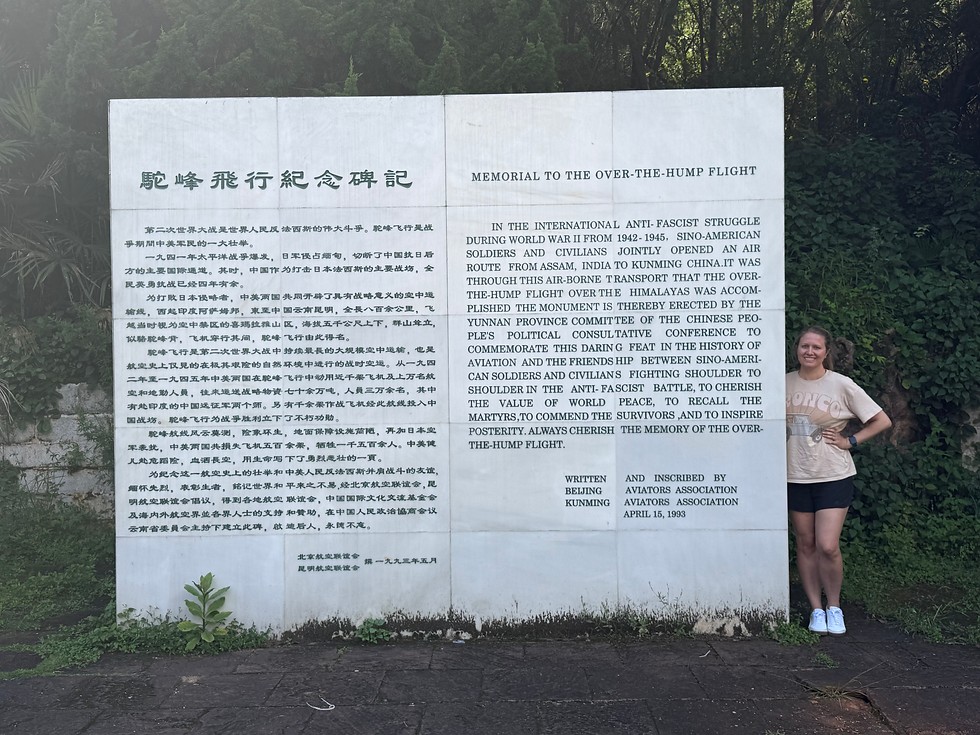
And on the way back to the city, we drove along the old Burma Road, where many others sacrificed to build this supply-line highway.

Former home and office of Chennault
Lastly, I got to visit (and dine in) the building where Chennault formerly lived and worked!
It is beautifully decorated with relics from the 1940s, miniature planes hanging from the ceiling, and tables that showcase many of his old photos.


In addition to it being one of the best meals I've ever eaten, I also got to try a local dish known as the "modern baba."
This bread-like food item is said to be developed for the Flying Tiger members who were feeling homesick and missing American food.
When the locals eventually tried it, they liked it, too—so it stuck!
Reflections on my visit
My exploration of Kunming was not just an educational experience—it was personal.
My grandpa first landed here after crossing The Hump and spent several days in this city prior to shipping to his final destination, Yunnanyi, where he worked with a direction finder, weather, and the control tower to help lost pilots find their way to land safely.
I found it fascinating that Kunming was his first experience in China, and it was mine, too.

The people are so welcoming and friendly, always coming up to say hello, welcome me to their city, or ask for a photo.
And as a writer, I found myself inspired by all the stories I read in the museums of the pilots who came a long way from home to help the people of China.


Comments